AI factories and large-scale AI clusters are changing the requirements for datacenter networking. As accelerator deployments grow, the network is no longer just a transport layer between servers. It becomes part of the AI data path. Input data, storage traffic, inference requests, model outputs, and synchronization flows must move with high throughput, low latency, and minimal CPU overhead.
This creates a new role for SmartNICs and DPUs. Instead of relying on host CPUs to process, copy, and route every packet, programmable network devices can move data closer to the accelerator. Xelera’s AI NIC concept targets exactly this challenge: a programmable network-to-accelerator platform that combines high-speed Ethernet, protocol offload, and direct DMA into AI accelerator memory. For AI factories, this enables low-latency network ingestion, Ethernet-to-accelerator data flows, storage-to-accelerator pipelines, and AI-specific packet preprocessing. The result is a more efficient infrastructure where CPUs can focus on orchestration and application control, while the SmartNIC handles the data movement path.
A second major use case is high-speed network security. Xelera is extending its existing Xelera Net IPsec offering toward 400G Ethernet environments, bringing the same SmartNIC-based acceleration principles to secure datacenter fabrics. In this model, IPsec processing is offloaded from CPU cores to the SmartNIC, enabling secure high-throughput connectivity without turning general-purpose servers into bottlenecks. This is especially relevant for cloud providers, AI datacenters, sovereign infrastructures, and security appliance vendors that need scalable encryption, integration with existing key exchange tools, and future-ready security capabilities.
Although AI data movement and network security are different applications, they share a common technical foundation: a canonical 400G SmartNIC infrastructure. This includes the SmartNIC firmware, high-performance drivers, and user-space libraries that expose the hardware capabilities to applications. Once this foundation is in place, different accelerators can be deployed on top: direct network-to-accelerator data paths for AI workloads, IPsec offload for secure connectivity, or additional network functions in future deployments.
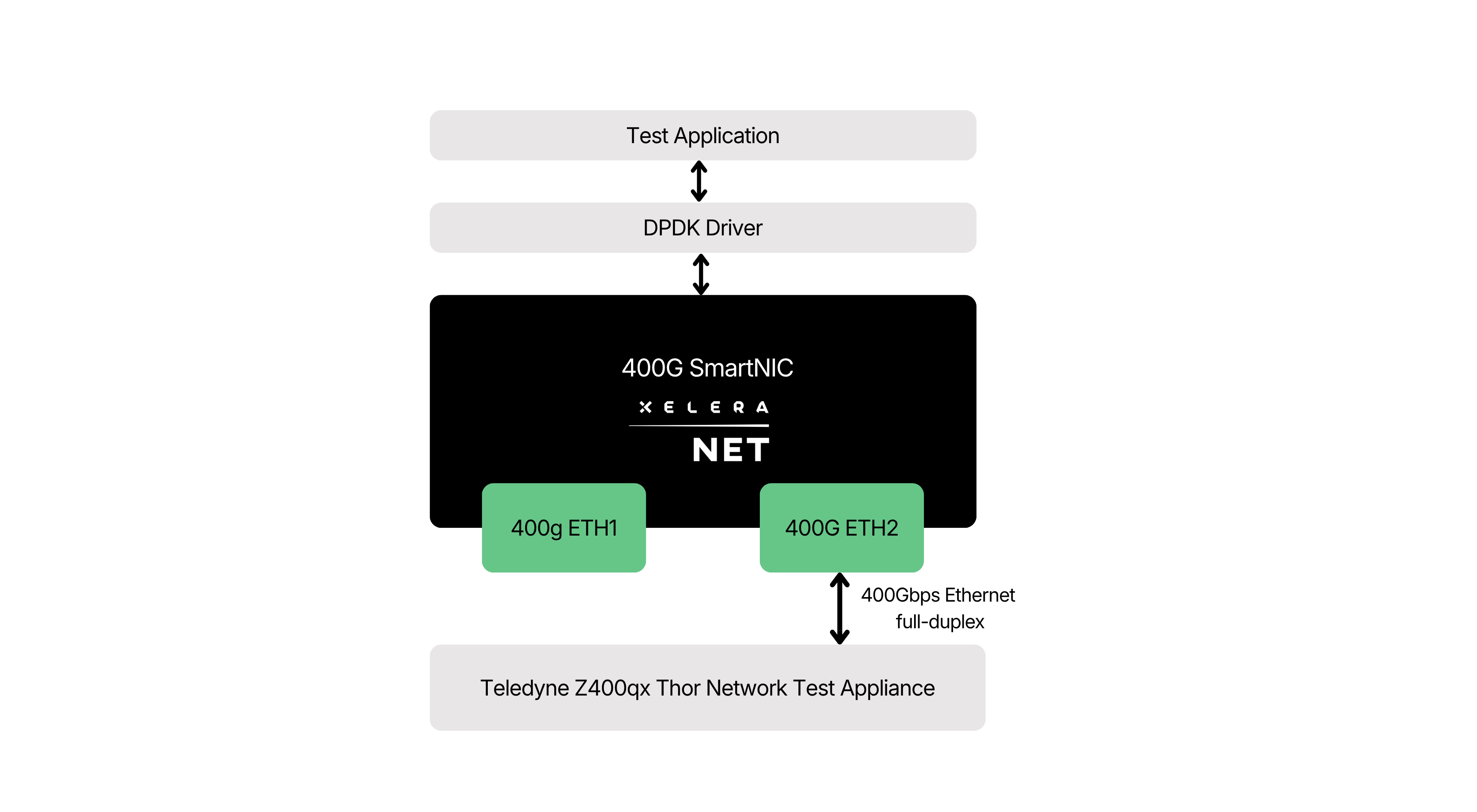
Xelera has benchmarked this common 400G SmartNIC infrastructure using a dedicated test setup. A test application communicates through a DPDK driver with the 400G SmartNIC, while a Teledyne Z400qx Thor Network Test Appliance provides a full-duplex 400Gbps Ethernet connection to the card. This setup validates the core platform layer before the individual use cases are deployed at scale.
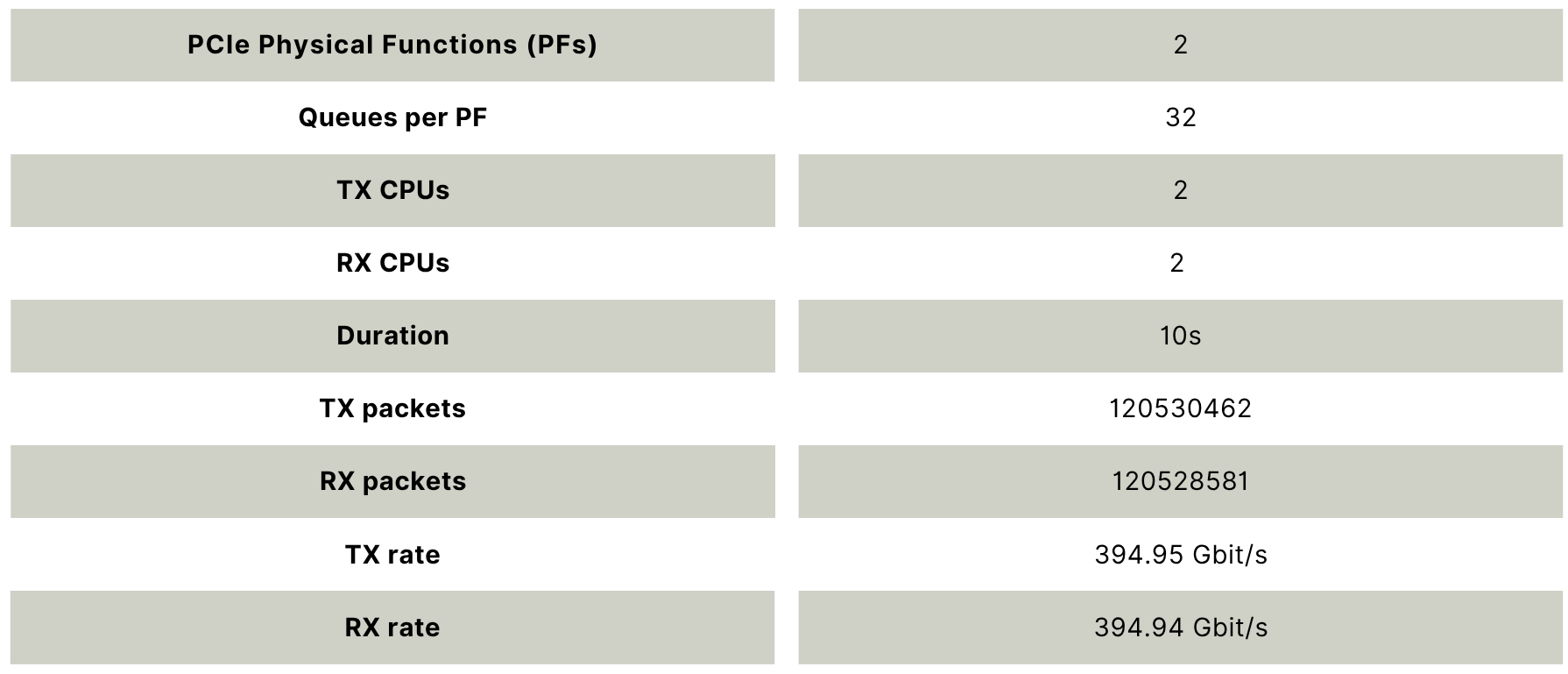
Excerpt of benchmark results:
From a strategic point, the value of SmartNICs and DPUs is not only in the hardware, but in turning that hardware into deployable infrastructure. By building a reusable software and firmware foundation, Xelera Net enables multiple high-performance use cases on the same 400G SmartNIC platform - from AI accelerator data movement to secure, high-speed network security.